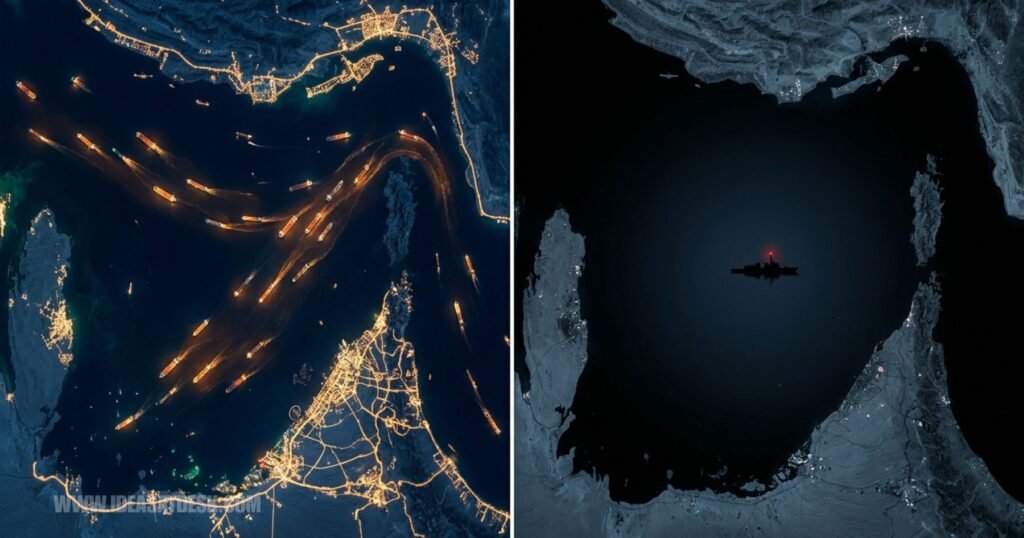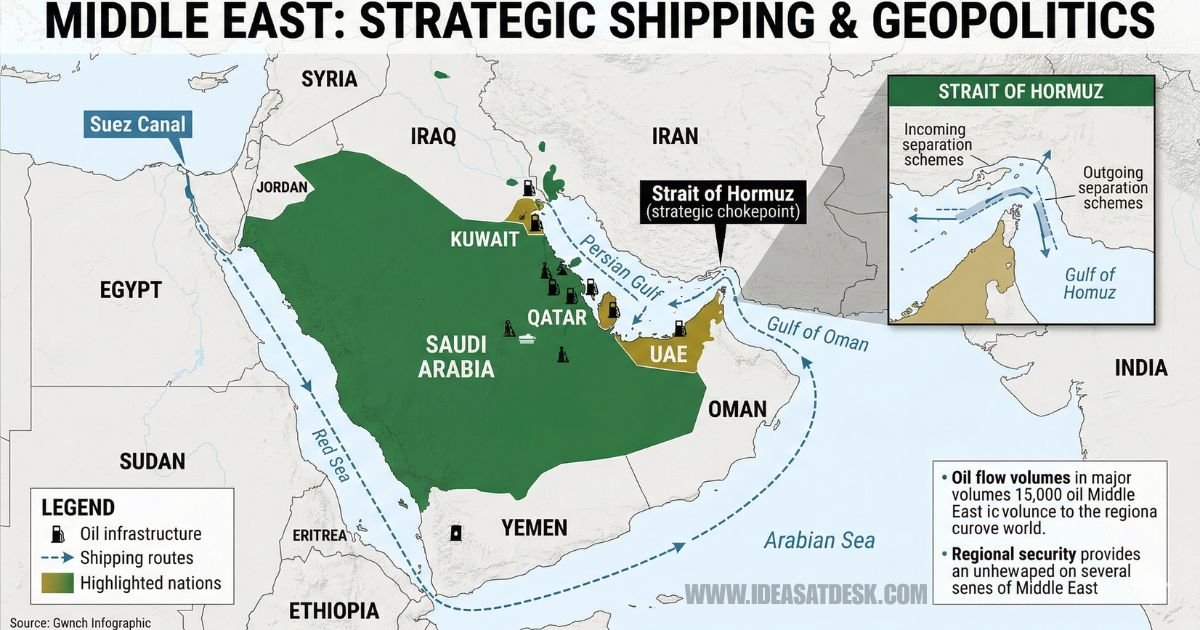
The Gulf Hormuz crisis just entered a new phase. On April 1, President Trump addressed the nation about Iran. He claimed victory. He said the military operation was winding down. But he said almost nothing about how the Strait of Hormuz, the 21-mile passage that carries 20% of the world’s oil, would actually reopen.
For anyone living, working, or investing in the Gulf, that silence was the most important part of the speech.
This is what the Gulf Hormuz crisis looks like from inside the region, and what it means for your decisions in the next 90 days.
Table of Contents
The Gulf Hormuz Crisis: Where Things Actually Stand
Let me give you the facts as of recording.
The war started on February 28 when the US and Israel struck Iran. Iran retaliated by closing the Strait of Hormuz. Five weeks later, 2,000 ships are stranded. 20,000 sailors are stuck at sea. Gulf oil production has been cut by 10 million barrels a day.
Trump set a deadline: April 6. Iran must reopen the Strait or face strikes on its power plants, bridges, and infrastructure.
But here’s what Trump didn’t say: he has no plan to secure the Strait himself.
His exact words? Other countries should “take the lead” on protecting the waterway. For Gulf nations whose entire economies depend on that passage, that was a gut punch.
The Negotiation Gap in the Gulf Hormuz Crisis
The public statements don’t match reality.
Trump says talks are going “very well.” Iran says there are no direct talks.
Here’s what we actually know.
The US sent Iran a 15-point peace proposal through Pakistani intermediaries. The terms essentially asked for unconditional surrender: nuclear program rollback, missile limits, and full reopening of the Strait.
Iran rejected it.
Iran sent back its own five-point counter-proposal. The most important condition: Iran wants international recognition of its sovereignty over the Strait of Hormuz.
That single condition is why this crisis won’t end quickly.
If Iran controls the Strait, it can close it again whenever it wants. No Gulf country, no shipping company, no investor would ever feel safe again. That condition is a non-starter for the US, Israel, and every GCC state.
As of early April, the two sides are not close.
The Gulf Hormuz Crisis: Two Scenarios
Scenario A: The Deal
Talks in Islamabad are still live. Pakistan confirmed it is willing to host direct or indirect US-Iran talks.
If a deal is reached, here is what recovery looks like for the Gulf:
Oil prices fall sharply. Analysts estimate a $15 to $20 drop in Brent the moment a ceasefire is confirmed. That would bring oil back below $90.
For Gulf governments, that sounds bad at first. But it’s actually good news for the region’s future. Lower oil with an open Strait means revenues start flowing again. Saudi Arabia can export. Qatar can deliver LNG. The backlog of 2,000 ships starts moving.
GDP recovers faster than expected. Goldman Sachs estimated that if the war ends by mid-April, the worst-case GDP contractions (Qatar and Kuwait down 14%, UAE down 5%, Saudi down 3%) get revised significantly upward.
Investor confidence returns. The real estate, tourism, and services sectors that froze during the war begin thawing. Companies that paused expansion plans revisit them.
The catch? Even in the deal scenario, the Strait doesn’t go back to normal. Insurance premiums stay elevated. Risk pricing stays higher. The cost of doing business through the Gulf just went up permanently.
Scenario B: No Deal
If no deal is reached by the deadline, Trump has threatened to strike Iranian power plants, oil wells, desalination facilities, and bridges.
Here’s what that means for the Gulf:
Oil prices spike further. Brent crude has already risen 50% since the war began. A strike on Iranian energy infrastructure could push prices past $130, possibly $150.
The “oil cliff” arrives. The IEA’s 32 member countries released 400 million barrels from strategic reserves, the largest emergency release in the organization’s 50-year history. That buffer runs out around mid-April. After that, there’s no cushion left.
GDP contractions deepen. The UNDP estimated the conflict may cost the region $120 to $194 billion, wiping out all regional GDP growth achieved in 2025. Goldman Sachs projects Qatar and Kuwait could see GDP plunge 14% if the war continues through April.
Humanitarian risks escalate. The GCC imports 100% of its sugar, 91% of vegetable oils, and 77% of its rice. Strait disruptions don’t just block exports. They choke imports too.
What the Gulf Is Doing About the Hormuz Crisis
The Gulf states are not waiting for Trump anymore.
Three things are happening simultaneously:
One: The UN Security Council is voting on a resolution proposed by Bahrain that would authorize countries to use “all defensive means necessary” to secure transit through the Strait. Saudi Arabia’s Crown Prince has spoken with Putin. Russia is not expected to block it. China, which gets 40% of its oil through Hormuz, is also expected not to veto.
Two: The UK is hosting a virtual meeting of 35 countries to discuss reopening the Strait. No operational plan yet. But the conversation is happening.
Three: Iran is now charging tolls for safe passage. Lloyd’s List Intelligence called it a “de facto toll booth regime.” At least two vessels have paid $2 million each in yuan to transit.
The message is clear: the Gulf states are working the UN, talking to Russia and China, trying to build an international coalition to reopen a waterway that the US started a war over and then declined to secure itself.
What the Gulf Hormuz Crisis Means for You
Here is what I want you to walk away with.
The question is no longer just “will there be a deal by April 6?” That question may not even matter the way it did last week.
The real question now is: Which Gulf countries have the infrastructure, the reserves, and the diplomatic relationships to operate in a permanently riskier region?
The UAE has its Fujairah bypass pipeline, its AA credit rating, and its diversified economy. It can reroute some oil exports without the Strait.
Saudi Arabia has deep pockets, the East-West pipeline, and is working every diplomatic channel.
Qatar and Kuwait are the most exposed. No bypass routes. Highest GDP risk. Longest recovery road.
Your awareness of that difference is what separates a good decision from a reactive one in the next 90 days.
The Takeaway
Trump’s speech told us three things:
- The US military operation is winding down on its own terms. Whether the Strait reopens or not appears to be secondary to Washington right now.
- The Gulf states are now on their own to negotiate, lobby, and secure the waterway their economies depend on.
- The long-term structure of the Strait has changed permanently. Tolls. Risk premiums. Insurance costs. Even in the best case, the cost of doing business through the Gulf just went up for a very long time.
The war changes the mood. But the underlying shift is structural.
If you live in the Gulf, work in the Gulf, or have money in the Gulf, the next 90 days are the most consequential since the war began.
Update (April 8, 2026): Hours before the April 6 deadline, Pakistan brokered a two-week ceasefire. Iran agreed to allow passage through the Strait with Iranian armed forces coordination. Ships will pay a $2 million fee. Approximately 1,500 vessels are waiting off the coasts of Oman and the UAE. The ceasefire buys time, but the structural changes outlined above remain in place. Watch this space.
Related: When the Strait Closed: What Happened to Gulf Economies in Week One