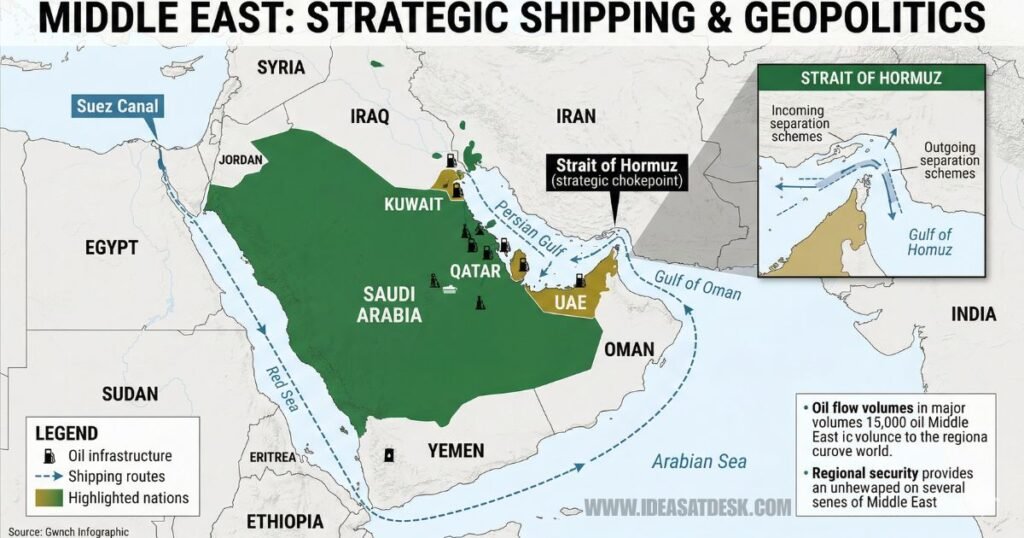
On February 1st, 2026, the Saudi Arabia stock market made a change that affects investors around the world.
Before this date, you needed special approval to invest from outside the country. Now, anyone from anywhere in the world can invest directly.
This is one of the biggest changes Saudi Arabia has made to its financial system in the last ten years.
Here’s what happened and what it means.
Table of Contents
What Changed on February 1st, 2026
For the past ten years, if you wanted to invest in the Saudi Arabia stock market from another country, you needed something called Qualified Foreign Investor (QFI) status.
This meant you had to meet certain requirements:
- Manage at least $500 million in assets
- Apply for approval from Saudi regulators
- Wait for permission before investing
The Saudi Capital Market Authority announced on January 6th that starting February 1st, 2026, this requirement no longer exists.
Now, any investor from any country can invest directly in Saudi stocks. No special approval needed. No minimum amount required.
The Timeline of Change
Here’s how access to the Saudi Arabia stock market evolved:
| Year | What Changed |
|---|---|
| 2015 | Market opens to large institutions only (minimum $5 billion) |
| 2019 | Requirements relaxed (minimum reduced to $500 million) |
| July 2025 | GCC residents allowed to invest directly |
| February 2026 | All barriers removed. Anyone can invest |
What this means in practice: if you’re an investment fund in Singapore, a pension fund in Canada, or even an individual investor in Germany, you can now buy Saudi stocks the same way a Saudi investor does.
You still need to work with a Saudi broker. You still need to follow Saudi market rules. But the extra layer of approval is gone.
Source: Saudi Capital Market Authority
Why Saudi Arabia Is Doing This Now
Saudi Arabia has a plan called Vision 2030. The goal is to make their economy less dependent on oil.
One way to do this is to develop their financial markets so more companies can raise money and more investors can participate.
Foreign Investment Has Been Growing
The numbers show foreign interest in the Saudi Arabia stock market has been growing even before the new rule:
| Year | Foreign Investors Registered |
|---|---|
| 2020 | 15,000 |
| 2023 | 35,000 |
| 2025 | 58,000 |
These investors now hold about $157 billion worth of Saudi stocks as of Q3 2025.
Here’s the interesting part about timing.
The Oil Price Factor
Back in 2022, oil prices were around $100 per barrel. Today in 2026, they’re around $70. That’s a 30 percent drop in just a few years.
When oil prices are high, Saudi Arabia has more money coming in. When oil prices are lower, they need to find other ways to attract investment.
Opening the Saudi Arabia stock market fully is one way to bring in foreign money without relying only on oil revenue.
When a country removes barriers during a time when their main export is earning less money, it shows they’re focused on finding new sources of growth.
Source: Saudi Ministry of Investment, Vision 2030
What This Actually Changes
First, it makes the process simpler. Before, foreign investors had to navigate a complicated approval system. Now they can work directly with brokers like any other investor.
Second, it opens the market to smaller investors. The old system required managing at least $500 million. Now a smaller investment fund or even individual investors can participate.
Third, it might increase trading activity. When more people can invest, there’s usually more buying and selling happening in the market.
Before vs After Comparison
| Aspect | Before Feb 2026 | After Feb 2026 |
|---|---|---|
| Approval needed | Yes (QFI status) | No |
| Minimum assets | $500 million | None |
| Process time | Weeks/months | Immediate |
| Who can invest | Institutions only | Anyone |
| Direct ownership | Limited | Full |
The Size of What Just Opened Up
Here’s how the Saudi Arabia stock market compares to others in the region:
| Market | Size (2025) |
|---|---|
| Saudi Arabia (Tadawul) | $2.2 trillion |
| UAE (combined) | ~$900 billion |
| Qatar | ~$180 billion |
| Kuwait | ~$140 billion |
| Egypt | ~$40 billion |
Saudi Arabia’s market is more than twice the size of the second largest in the Middle East.
There are still some limits. Saudi Arabia has rules about how much foreign ownership is allowed in certain companies. Those rules haven’t changed.
But the entry barrier is gone.
What This Means for Different People
For global investors: Easier access to one of the largest stock markets in the Middle East. No approval process. No minimum requirements.
For Saudi companies: More potential investors. Greater liquidity. Possibly higher valuations.
For the Saudi economy: A new channel for foreign money to enter the country without relying on oil exports.
Whether this brings in significantly more foreign investment will depend on several things: how the market performs, what global investors think about the region, and whether Saudi Arabia continues making other business-friendly changes.
But the infrastructure is now in place. The door is open.
The Bigger Picture
Let’s connect these pieces.
Saudi Arabia eliminated the Qualified Foreign Investor requirement on February 1st, 2026. This means anyone from anywhere can now invest in Saudi stocks without special approval.
This is part of Saudi Arabia’s larger effort to develop their economy beyond oil and attract more foreign investment. They’re doing this at a time when oil prices are lower than they were a few years ago.
The number of foreign investors in the Saudi Arabia stock market has grown from 15,000 in 2020 to 58,000 in 2025. The market they’re opening is worth $2.2 trillion.
It removes friction. It expands access. And it shows what happens when a country decides to open up a major part of its economy.
This article is based on my video essay. Watch the full breakdown on Ideas at Desk on YouTube.