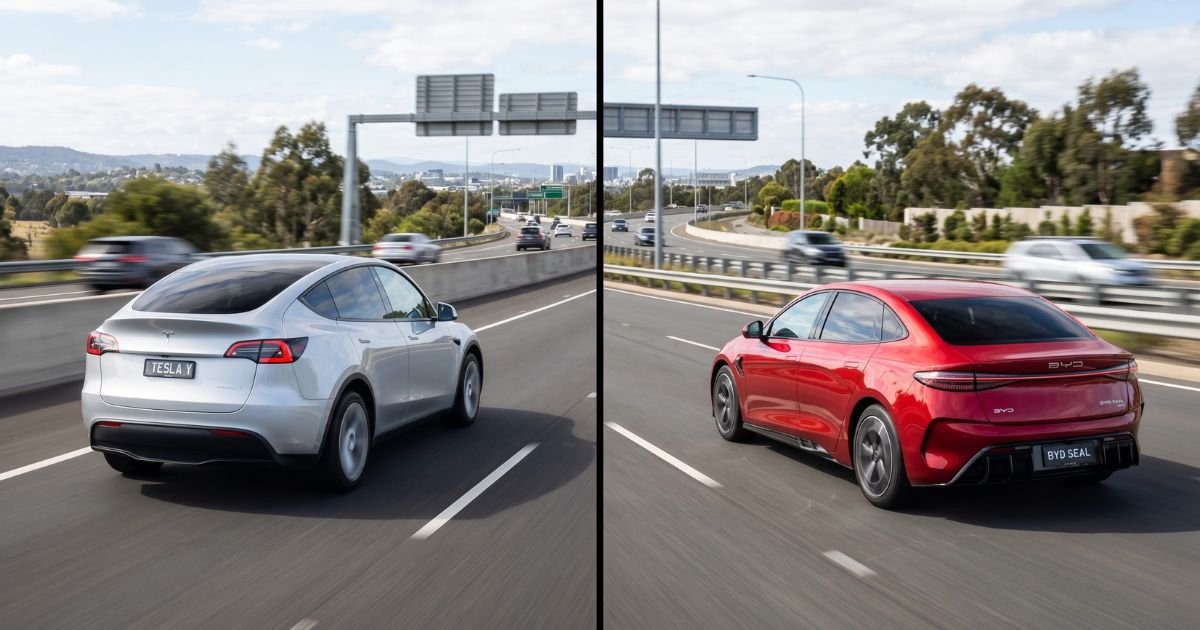
Tesla vs BYD just flipped again. Q1 2026 numbers dropped 48 hours ago, and Tesla has officially clawed back the #1 spot in global EV sales. But before we start the victory lap for Elon, there’s a massive catch. This isn’t just about sales. It’s about a radical shift in Beijing’s strategy that just made buying an EV in China a lot more expensive.
Today we’re breaking down the policy pivot hitting the auto market, why BYD’s pure EV sales plummeted 25%, and why your next car showroom visit in Riyadh or Dhahran is about to look very different.
Table of Contents
Tesla vs BYD: The Q1 2026 Numbers
Tesla delivered 358,023 electric vehicles in Q1 2026. BYD delivered 310,389 pure EVs in the same period. That’s a lead of roughly 48,000 units for Tesla.
But here’s the context that matters.
Tesla’s deliveries were up 6.5% year-over-year. BYD’s pure EV sales dropped 25.5% compared to Q1 2025. Tesla also produced 408,386 vehicles but only delivered 358,023, leaving over 50,000 cars sitting in inventory.
Both companies are feeling pressure. The “easy growth” era is officially in the rearview mirror.
The Policy Pivot: Why BYD Stumbled
So how did Tesla jump back in front?
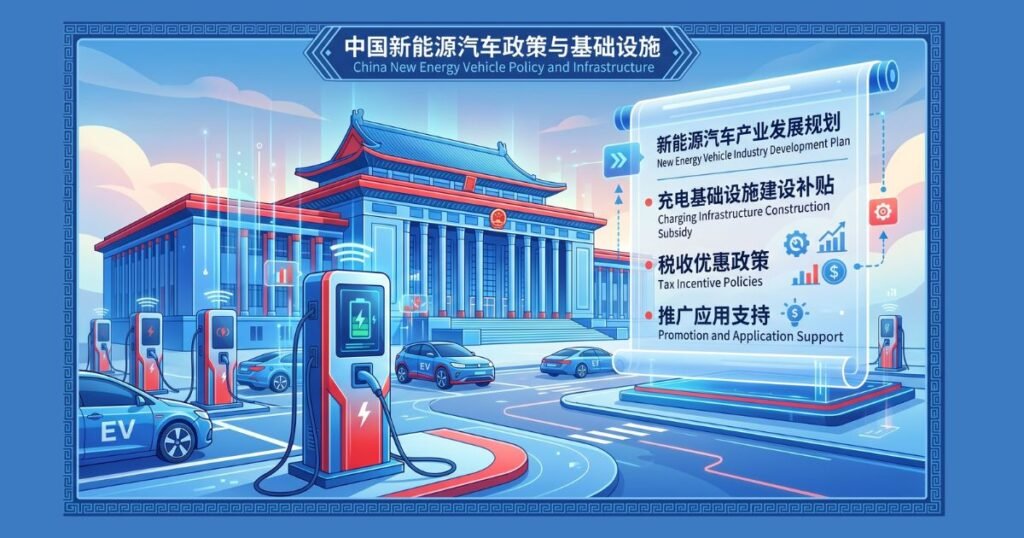
On January 1st, China’s new 2026 subsidy policy went live. For years, the government handed out fixed cash subsidies to keep the EV price wars going. But now? They’ve switched to a percentage-based model that actually hurts lower-priced, budget cars.
Here’s how it works:
Under the old system, a buyer could get up to 20,000 yuan ($2,800) for scrapping their old car and buying a new EV, regardless of the EV’s price. Under the new system, the subsidy is calculated as 8% of the vehicle price, capped at 15,000 yuan.
For a 100,000 yuan BYD Seagull, that means roughly 8,000 yuan in subsidies. For a 300,000 yuan Tesla Model 3, it could mean the full 15,000 yuan cap.
The math now favors higher-priced vehicles. BYD’s bread and butter is budget EVs. Tesla’s lineup sits higher in the price band.
The bigger picture: Beijing has officially adopted an “Anti-Involution” stance in the 15th Five-Year Plan. That’s party-speak for ending the era where companies bleed cash just to kill each other on price. The government is now pushing automakers toward “value-driven competition” instead of “price-driven competition.”
Tesla, with its global footprint, was less exposed to this domestic Chinese reboot than BYD was.
Tesla vs BYD in the GCC: The Saudi Push
Now let’s bring it home. If you’re in the GCC, you’ve probably noticed those green “CHINA” badges are everywhere lately.
Just last month, Al-Futtaim BYD opened three brand-new showrooms in Saudi Arabia: Abha, Khurais, and the first-ever mall showroom in Mall of Dhahran. They aren’t just selling cars. They’re building a massive “3S” network: Sales, Service, and Spare parts.
This is the fully integrated approach. Walk in, buy a car, get it serviced, source parts, all under one roof. It’s the infrastructure play that European and American brands took decades to build in the region.
The pattern: While the West is busy building trade walls and tariffs, the GCC is building infrastructure.
The Gulf is becoming the neutral testing ground for what we call the “Hardware Divorce.” Whether you’re a Tesla fan or BYD curious, you’re now choosing between two entirely different digital empires: the Silicon Valley ecosystem or the Shenzhen “Red Stack.”
And in 2026, the GCC is where that battle is actually being won.
Winner of the Week: Early Adopters in the GCC
2026 is officially the year of choice for EV buyers in the Gulf.
New luxury EV models are landing in showrooms across the region. The EVIQ charging network is expanding rapidly, with 60 stations planned across Riyadh, Jeddah, and the Eastern Province by the end of 2025, and highway coverage intensifying in 2026. EVIQ’s target: 5,000 fast chargers across 1,000 locations by 2030.
The friction of owning an EV in the desert is finally disappearing.
Saudi Arabia is targeting 30% EV penetration in Riyadh by 2030. Lucid is manufacturing locally. Ceer, the PIF-backed Saudi EV brand, is preparing to launch. And BYD is aggressively expanding its retail footprint.
For early adopters willing to jump in now, the infrastructure is finally catching up to the cars.
Loser of the Week: Legacy Tier-1 Brands
The traditional giants are getting hollowed out.
Buick: The Chinese-built Envision saw Q1 2026 sales crater by 71%. A $3,000 price hike driven by tariffs pushed buyers away. Dealers now have roughly six months of unsold inventory sitting on lots.
Stellantis: The Jeep Wagoneer S, their flagship electric SUV, moved just 175 units in Q1 2026. That’s a 93% nosedive from the 2,595 units it sold in Q1 2025. The gas-powered Charger outsold its electric twin 7-to-1.
While Tesla and BYD fight for the top spot, the middle of the market is being hollowed out. Legacy brands that can’t compete on price (like BYD) or on brand premium (like Tesla) are getting squeezed from both sides.
The Thread: Brain vs. Brawn
Everyone is talking about Tesla’s sales numbers. But watch their Cybercab filings instead.
Tesla is pivoting hard toward autonomy to justify their lead. Elon Musk is betting that self-driving robotaxis will be the next growth engine, because the core car business is showing signs of a demand ceiling.
BYD is playing a different game. They’re doubling down on massive manufacturing hubs in emerging markets. While Tesla refines software, BYD is building factories.
It’s a race between “Brain” and “Brawn.”
Tesla is betting on autonomous technology as the differentiator. BYD is betting on scale, price, and infrastructure reach. Both strategies have merit. Neither is guaranteed to win.
What This Means for You
If you live in the GCC, here’s what to watch:
- Showroom expansion: BYD is building fast. Tesla is established. Chinese brands are entering. The choice is widening.
- Charging infrastructure: EVIQ, Electromin, and private networks are filling gaps. Long-distance EV travel across Saudi Arabia is becoming practical.
- Policy signals: Saudi Vision 2030 wants EVs. The government is backing infrastructure and local manufacturing. The tailwinds are real.
- Price pressure: China’s domestic price war may be ending, but competition in export markets like the GCC is intensifying. Expect aggressive pricing and financing offers.
The Tesla vs BYD battle is no longer just about who sells more cars. It’s about which ecosystem wins in the regions that matter most for growth. The GCC is one of those regions.
Related: China’s 15th Five-Year Plan: 3 Shifts That Change Everything